



- Oct 25, 2020
- 2 min read
“...help people “acknowledge, experience, and bear the reality of life – with all it’s pleasures and heartbreaks.”
The Body Keeps the Score
Currently in the midst of reading The Body Keeps the Score by Bessel Van der Kolk and loving every word of it. It is full of insights into the brain's anatomy / functions and is a great resource for learning about how trauma affects the neurological pathways of the body. The idea of safety vs. activation and how this appears in the body is something that continues to influence how I see this project.
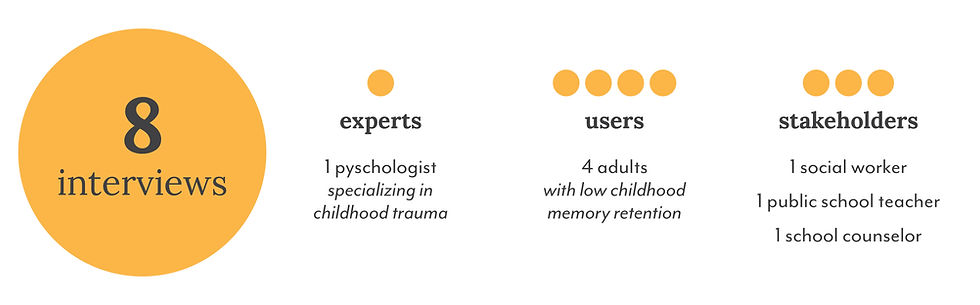
This month I have conducted ~almost~ all of my interviews. I ended up conducting two more interviews with participants from my survey. This was a great way to see how people with poor childhood memory retention reacted to their situation without saying it was caused by dissociation. It was interested to see how they described their childhood experiences without naming it and then what helped them push back into the present moment.
As I conducted what I thought was my last interview, I realized that I didn't want to be done with hearing people's experiences. Arguably my favorite part of the process, I know interviews bring so many unique perspectives to the process. I decided to get in touch with a school counselor because I felt like I hadn't heard enough from the people who work with kids directly and on a daily basis (a.k.a, the mentor / person in their corner). In this point of the process, a school counselor would be the perfect mix of trauma-informed psychology and the overall big picture of a child's reality. I am hoping to conduct this interview in the next few weeks and be back on track to start connecting themes by the end of November.
This past month, I finished up writing transcripts of all the conducted interviews, so now everything is recorded in writing and ready for pull quotes + gathering insights. I can't wait to dig back into the details and see what I can pull out in a new light.
As for my next steps, this month will be spent looking back through transcripts and finding common themes and insights. Then, creating visual collages of what keeps people tied to the present and aligned with the feeling of safety.

